Awilda Rivera
  • Home
  • Holistic Success Coaching
    • Method & Process
    • Why Work with Awilda?
    • The Client Experience
    • Coaching Options >
      • Self-Study Coaching Options
      • 1-on-1 Coaching
    • Book & More >
      • BOOK - Success Math: A Millennial's Qualitative Approach
      • COURSE: Success Math
      • PODCAST: Win Life with Awilda Rivera
      • IGTV Series - Grow
    • Case Studies
    • Self-Coaching Freebies!
  • Artemis World Travel
  • Spiritual Advisment
    • Spiritual Advisement
    • Reiki Certification Program
    • Need a Wedding Officiant?
  • Learn More
    • Contact Me
    • About Me
    • Free Resource Library
    • Knowledge Share
  • Home
  • Holistic Success Coaching
    • Method & Process
    • Why Work with Awilda?
    • The Client Experience
    • Coaching Options >
      • Self-Study Coaching Options
      • 1-on-1 Coaching
    • Book & More >
      • BOOK - Success Math: A Millennial's Qualitative Approach
      • COURSE: Success Math
      • PODCAST: Win Life with Awilda Rivera
      • IGTV Series - Grow
    • Case Studies
    • Self-Coaching Freebies!
  • Artemis World Travel
  • Spiritual Advisment
    • Spiritual Advisement
    • Reiki Certification Program
    • Need a Wedding Officiant?
  • Learn More
    • Contact Me
    • About Me
    • Free Resource Library
    • Knowledge Share
Search by typing & pressing enter

YOUR CART

Knowledge Share:
a place for discovery & growth

2/8/2018 0 Comments

A Closer Look:  Niyamas

by Awilda Rivera

Originally published in 2016 In Aquarius Magazine for her long running column "Under The Bodhi Tree" under the heading 'Niyamas'

nYoga is not just about putting your legs behind your head.  The practice of yoga is steeped in ancient philosophies that are supposed to help to inform the intent & focus of the student. In order to completely understand this, one must first accept that the tree of Yoga has 8 limbs, of which Asana is one. The other 7 limbs are equally if not more important than Asana, even though the physical practice seems to get the most attention in the west.
 
The Trunk of the tree is the Niyamas. The Niyamas provide the yogi a rubric for dealing with herself. The roots of the tree of Yoga are the Yamas. The Yamas give guidance about how to interact with the world around us.  This piece aims to focus on the NiYamas.
 
In this hectic, busy and uncertain world its is becoming clear that the only thing in our control is ourselves. The Niyama’s are an ancient yet elegant check list that keep us grounded and focused on being our best selves at all times. These “observances” highlight the 5 areas that ancient yoga philosophers believed were of utmost importance.
 
The Niyamas are:  Saucha (purification), Samtosa (Contentment), Tapas (asceticism),  Svadhyaya (Self-Study), Ishvara Prandihana (devotion)
 
Saucha, often translated as clealiness, isn’t just about keeping your home clean but also the purity of your being. Keeping selves clean refers to the actions required to keep our bodies healthy, so that we have both fully functioning organs and a clear mind. [1]  Keeping the body clean has become increasingly easier as general awareness has increase about our food sources and food processing practices. However, keeping the Mind clear has become increasingly more difficult as technology has evolved resulting in a relentless barrage of cell phone notifications and updates.   Humans are so over stimulated by their technological devices that finding a quiet moment to still the mind and get clear their mind is incredibly challenging for most.
 
Samtosa, simply stated means contentment. The idea that one should be satisfied and happy with what they have, in other words loving what is rather than despairing about what could be.  “From contentment one gains Supreme Happiness.”[2]  (Sutra of Patanjali - II.42)  Contentment is a real issue in the developed world, especially when folks are focused on trying to catch up with Instagram Influencers flashing Stacks of cash on the beach and working non-stop towards a goal of either corporate dominance or entrepreneurial stardom.  Samtosa is a straight forward yet complex idea that is intended to cover all aspects of your life.  In other words, “it is about ourselves – what we have and how we feel about what God has given us.”[3] Don’t get caught up on the G-word, the point is that if we are able to focus on being appreciative and grateful for what the Universe has provided and what we have done to get to the present moment, then we will be more able to experience joy for what is in each moment.
 
Tapa also known as self-discipline, refers predominately to the business staying physically fit. Cultivating clean eating habits, healthy breathing patterns, aligned body posture, & moderating our nutrient intake are all apart of Tapas. Fortunately in our body conscious world this is not such a big ask. However, many still struggle with self-discipline when it comes to follow through. It is one thing to think of a new course of action, it is quite another thing for to take a take a new course of action and see that plan through to completion.  However having a healthy self-awareness is essential to keeping one honest.  When a person begins to lack self-discipline, she is the only on that knows it and she is only one that can take the action to regain that discipline. Tapas is ultimately about follow through, commitment & knowing yourself well enough to keep yourself accountable.
 
Svadhyaya means Self Study.  The Sutra’s say “From self-study comes communion with ones personal diety.” (Sutra II.44)[4]   Studying yourself is a necessary pursuit.  Knowledge of self comes from the pursuit of mental, physical & spiritual growth. The practice of Yoga promotes that in a multitude of ways, the philosophy of Svadhyaya makes it clear that the purpose of Yoga is to help you turn the mirror on YOURSELF so that you can become deeply connected with your truth – whatever that may be.  The bonus is effect of deep, sincere Self-Study is a more salient connection with the Divine. For some the Divine is represented by a particular Religious figure, for others it is seen in the elegance of science, yet others believe in some greater disembodied energetic force (i.e. The Universe). Regardless of what you believe, digging in deep and daring to study yourself will inevitably open a path for you to feel oneness with forces greater than yourself.
 
Isvaraprandihana is a tricky one. While many translate this as “devotion to God” other texts provide us with an explanation that more truly captures the secular yet spiritual nature of Yoga.  BKS Iyengar helps us to understand that Devotion and Surrender are at the core of this concept.[5] The idea is to be very intentional with your acts in such that you are both comfortably detached from the need to have your behavior reciprocated and  are also able to separate yourself from your acts. Growing in your selflessness through your acts allows you to experience your humanity and spiritual oneness. The Devotion and detachment from the reciprocation lead to a complete selfless surrender that ultimately reinforces your Divine Connection.
 
With a combination of complexity and practical simplicity, the Niyamas offer us an incredible guideline for taking care of not only our physical body, but also our mind and spirit. The Niyamas help us to understand that our actions must be guided by:  a deep understanding and commitment to ourselves, a sense of joy in our current circumstance, and an acceptance of our Divine connection.  Its almost a cheat sheet to healthy, happy, drama free living!!!
 
Until Next time……


[1] Heart of Yoga, TKV Descihachar (p. 101)

[2] Yoga Sutras Of Pantajali: As Interpreted by Mukunda Stiles (p.27)

[3] Heart of Yoga, TKV Descihachar (p. 101)

[4] Yoga Sutras Of Pantajali: As Interpreted by Mukunda Stiles (p.28)

[5] The Tree of Yoga, BKS Iyengar (p.51)

Categories

All Infographic Personal Management Podcast Interviews Professional Development Success Coaching Time Ninja Series Under The Bodhi Tree Yoga

Archives

March 2018
February 2018
December 2017
November 2017
October 2017
September 2017
August 2017
June 2017
May 2017
April 2017
March 2017
November 2016
October 2016

0 Comments

11/30/2017 0 Comments

Yoga at Work: A look at how Corporations embrace wellness

by Awilda Rivera

originally published February 2017 in Aquarius Magazine

Picture
Corporations are no longer satisfied with being the best in their industry, or the marketplace. The new end game is “Being the best place to work”. Making a place the “best” can include all manner of things from LinkedIn’s free gourmet cafeteria to Google’s internal coaching program. However, employers have started to realize that there is a correlation between their workforce’s level of happiness and the success of their company.
 
Mindfulness practices have emerged as one of the focal points of a new wave of corporate employee benefit initiatives.  A 2015 study conducted by  the University of Warwick's Centre for Competitive Advantage in the Global Economy shows that happy employees are 12% more productive.[1] Consequently in their search for the magic solution to increase happiness in the workforce, these companies discovered that offering Yoga during office hours could achieve their intended objective.
Yoga gives employees an opportunity to quiet their minds, move their bodies and build a foundation for mindfulness while being in the environment where they spend most of their waking hours, Work.
 
Yoga in the workplace has become popular over the last 3-4 years with top-level companies like Apple, McKinsey & Co., HBO, & Proctor and Gamble offering yoga on site during working hours. [2] It is actually quiet easy to offer Yoga in the work place because minimal equipment is needed. All that is required is a large meeting area, cleared of all furniture and a Yoga Alliance certified instructor. Employees can be encouraged to bring their own mats or the company can provide them.
 
Of course, the style of yoga being taught during the workday needs match the needs of the employees. In Atlanta, Home Depot offers Yoga on site during working hours to their employees through their company gym.  The style of yoga taught there is rather rigorous because that is what the employees want, and Home Depot has showers on site to provide their workforce with an opportunity to bathe after such a rigorous practice.  In alternative, at a company that does not possess shower facilities on site a lower impact practice may be more appropriate.
 
A gentle restorative yoga practice would be ideal for companies where there is a call center on site,  have a focus on high volume business transactions, that deal with a lot of time sensitive negotiations, or have stringent project deadlines. A passive yoga practice  would provide a welcome shift from the high level of intensity required by the job. Ultimately, happier employees are more productive employees. Happy employees are less likely to leave their company, and if they do leave they are more likely to sing the praises of their former employer.  For businesses who depend on a their employees being sharp to succeed, Yoga may be the secret weapon for success in this new era of corporate evolution.

**If you are interested in bringing Yoga to your company please feel free to contact me directly at  [email protected]


[1] http://fortune.com/2015/10/29/happy-productivity-work/

[2] http://www.onlinemba.com/blog/10-big-companies-that-promote-employee-meditation/


Categories

All Infographic Personal Management Podcast Interviews Professional Development Success Coaching Time Ninja Series Under The Bodhi Tree Yoga

0 Comments

11/16/2017 0 Comments

Bhakti Yoga: The yoga of Love & Devotion

by Awilda Rivera

originally published in Aquarius Magazine in 2016
Picture
For the last 12 months, we have explored questions around the practice, purpose and benefits of Yoga Asana. We have taken time to explore some of the philosophical underpinnings of this historically rich tradition; and we have also discussed how to identify & begin a physical yoga practice that resonates with your soul.  Yet, we have only begun to scatch the surface.  All we have discussed relate primarily to the physical practice of Yoga Asana and all that comes with it.
 
The question remains: Can Yoga exist off the Mat, with out Asana being involved?
Yes! There are several types of Yoga that exist. As westerners we are most commonly acquainted with  Hatha & Raja Yoga[1].  Hatha & Raja Yoga contain an essential element of physicality that is very attractive to busy people in the west who are looking to exercise their body in an intentional. It is through this intentional exercise that they hope to achieve balance, increased self-awareness, and ideally inner peace – also know as enlightenment.
 
Bahkti Yoga exists devoid of required physicality. It is known as: The Yoga of Love, The Yoga of Devotion, The Yoga of Devotion To God.  Ultimately, this is the Yoga of Surrender to the Divine.  There is neither a Diety in particular to whom you must devote yourself, nor one idea; however, in order to surrender completely you must devote yourself to something greater than yourself.  The devotion to something greater need not take a shape or personage, but it can be simply embracing the Divine Love and connection we all share OR  the Beauty of Nature all around us in every living thing.
 
In a modern western world, it is understandable that we modify the application of the ancient principles of Bahkti Yoga to fit our realistic needs. Therefore you many not feel called to sing Kirtan,  chant mantras every morning, or set an altar with deities to whom you pray directly… and that’s OK!  There are may ways you can tap into the spirit of Bahkti Yoga such as: volunteering, giving food to the homeless, dedicating the energy your physical Yoga practice to someone who is in need, interacting with all around you from a place of unconditional love & non-judgment, or immersing yourself in nature so that you can appreciate the beauty of the world around you.
 
Bahkti Yoga is not a RELIGION. It is just another avenue available to those who are looking to connect with the Divine through a unity with the world around them. While I would certainly encourage you all to experience a Kirtan performance and research mantras, I understand that for some of you that will not resonate. The great news is that in this brave new world, we have the opportunity to take the powerful ideas of Bahkti Yoga: Love – Devotion – Connection with the Divine, and find ways in our everyday lives to organically engage in this fulfilling and empowering practice. How will you bring a little Bhakti Yoga into your life?
Until next time…. Namaste!! 


[1] You may be unfamiliar with Raja Yoga, however it is the Original Form of classical Yoga from which 90% of yoga lineages found in west were derived. It is also known as the ‘8 limbed path’ of Yoga.  Hatha Yoga is more commonly known as ‘Sun Moon’ Yoga as is focused on using the body as a vehicle to transform the conscious of an individual.


Categories

All Infographic Personal Management Podcast Interviews Professional Development Success Coaching Time Ninja Series Under The Bodhi Tree Yoga

0 Comments

11/2/2017 0 Comments

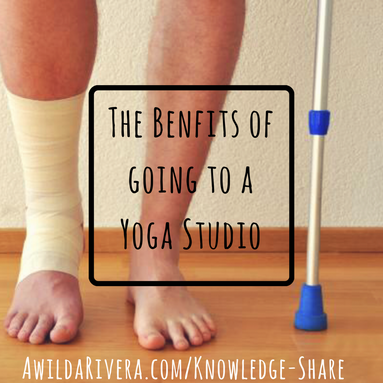
The Benefits of Going to a Yoga Studio....

by Awilda Rivera

originally published in Aquarius Magazine in 2016
Picture
There are a million Yoga Magazines, Websites and Home resources these days. The availability of DIY Yoga has provided many with a low cost introduction to Yoga Asana & Philosophy.  The prevalence of these resources has created a false sense of security for those who avoid Yoga Studios like the plague. Many ask: “Why pay for a class at a Yoga Studio when I can get a Yoga YouTube video for Free?”
 
The truth is Yoga Asana can cause injury if not done properly. Over the last 10 years there has been considerable debate and discussion about the dangers of Yoga. Regardless of where you stand on the issue, one thing is undeniable: One can get hurt practicing Yoga incorrectly.
 
Any activity where you are engaging in physical movement can cause injury.  Although Yoga is low impact, the risk of injury is still present. Even the most basic Asana can injure you, if done improperly. Learning the safest way to move into & hold a Downward Dog is something that is difficult to learn from a video or magazine. One may look at a picture of a person in Downward Dog and think, “Oh that’s easy! All I have to do is put my self in a Upside Down ’V’ shape.”  However, incorrectly holding Downward dog over time can cause serious rotator cuff, elbow, wrist and shoulder problems. I am not suggesting that one must execute the pose perfectly to avoid injury, but rather that an awareness of proper alignment is essesential to a safe & sustainable Yoga Asana practice.
 
Many of you are thinking, “For $20 a class I’ll take my chances and move slowly through a FREE  Yoga video.”  I will admit initially I, too, let my opinion about how much Yoga Studio classes cost dictate how I felt about learning from a real person. I was completely opposed to paying any money to practice Yoga so I began to explore Youtube. Quickly, it became apparent that there was a wide variety of teachers & teaching styles available on the Web.
 
Left to my own devices, I risked it all as I dove into various styles. Determined to get the most out of the free internet resources I chose the most seemingly reputable teacher and practiced with the video. Lacking the guidance of a trained teacher, I forced myself into shapes, attempting to watch the computer and mimic the instructor. I was attempting to run with out knowing how to walk. Not only was I failing to get the most out of the free videos, but I also wasn’t learning anything. Ultimately, I was left with a sore wrist, achy lower back & more questions than answers about the appropriate way to practice Yoga Asana.
 
It was not until I attended my first studio classes that I became acquainted with the fundamental Yoga alignment principals through demonstration. It was invaluable to be able to watch a knowledgeable instructor perform the Asana and then have that instructor provide me with feedback about modifications that can help me achieve the posture more safely in my body.  Additionally, the instructor’s reminders to “find your edge and pull back” were critical to the process of developing physical, muscular and sensory awareness in my body.  “The most important reason a person should attend a studio class, is to learn what they should and should not be feeling in their body,” says Physical Therapist Kara Strauss.  She adds, “having an experienced teacher look at your body & provide modifications can be the difference between a safe practice and getting hurt. The cost of rehabbing an injury is exponentially greater than the cost of attending a few yoga classes to learn the basics.”
 
There is nothing wrong with saving a few bucks and cultivating an Asana home practice.  One must simply take the time to learn the basics from a knowledgeable, certified, professional so you have a strong foundation. If you lack an understanding of the fundamentals of Yoga alignment principals, and venture into the world of DIY Yoga, what you are risking could be worth more than the money you save by avoiding the studio. Spend the money & practice safe. Your body is worth it.

0 Comments

10/19/2017 1 Comment

Yoga Burn out is REAL

By Awilda Rivera

This piece was originally published in July 2016 in Aquarius Magazine
Picture
Yoga can be a mystical and enchanting love.  For some Yoga is an experience of love at first sight,  and yet others have to spend time cultivating their yoga love affair. What happens when you fall out of love? What happens when you no longer have the same zeal for the practice? When all of your favorite teachers bore you? When you no longer have the desire to practice on your own? Have you stopped loving Yoga?
 
Many Yogi’s suffer from the idea that Yoga is a panacea. I agree that Yoga produces a multitude of physical, medical and energetic benefits. However when all you do is Yoga, all the time, you can get too much of a good thing.  Yoga fatigue occurs when Yoga is your only physical practice, spiritual outlet and extra-curricular activity.
 
Space is key. In every relationship there must be space – between partners, between the creator and their art, the athlete and their sport, the professional and their craft. If there is no space then the relationship is out of balance.  When you take space form the activity, person, or behavior that you love then when you come back to it, you are able to approach it with a fresh perspective and renewed interest.
 
For 48 months I did Yoga, and only Yoga. I learned Yoga Asana, I taught Yoga, I studied Yoga text, I had Yoga meetings, I got involved with Yoga organizations – my life was consumed by Yoga.   About 5 months ago I started to lose some of my zeal for Yoga, I had too much of a good thing. I was of the strong opinion that if you practice Yoga regularly then you don’t need any other daily exercise.  Yet, I couldn’t deny that I was just not having as much fun practicing Yoga anymore. I knew I needed to take action, but the only action that came to mind was to – take a break from Yoga.
 
I sat with this deep, frightening truth.  It was beyond my comprehension that I could already be burned out.  After sitting with the reality that confronted me, I realized I needed to vary my daily physical activity; in short I needed to diversify my exercise.  Once I accepted what I was feeling, the resolution presented itself rather quickly: It was time for me to start running.  But, was I going to break up with Yoga?
 
Running is wildly different from Yoga.  I was attracted to the speed, quick satisfaction, jock culture and the challenge.  Running was like  a mistress I was cheating on Yoga with, all the time I spent running I thought about Yoga.  As I ran I would sequence my ideal Yoga class to compliment the trauma a runner’s body experiences. The more I was drawn to running the more I was called back to the mat. The space I allowed myself brought me back to the mat.
 
Allowing myself the space to be honest, take time away from yoga, and be open to other pursuits helped to reinvigorate my love of Yoga. I was able to look at the practice & its benefits through a new lens.  Yoga was no longer my only choice, but rather a foundation from which I could create an expansive, safe, varied psychical practice with avenues for spiritual exploration and energetic release.
 
Love Yoga, Love yourself, love your options.  Remember you can have too much of a good thing.  Until next month…..

1 Comment

10/5/2017 0 Comments

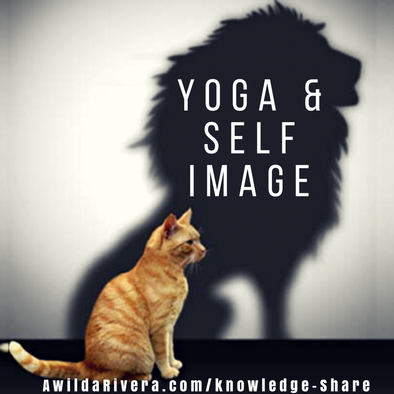
Yoga & Self Image: a practice for embracing the self

by Awilda Rivera

Originally published in Aquarius Magazine June 2017
Picture
What we think about ourselves matters.  As summer winds down, we can reflect on  the pressure we place on ourselves each year for the "perfect beach body" . Bathing suits, pools & BBQs are opportunities for us to gather and beat the heat, but instead we spend the summer experiencing these moments as hot beds of anxiety. We place an incredible amount of importance on how we look and that can be difficult for anyone who struggles with Self-image.  You might be wondering: “What the heck does this have to do with Yoga?”
 
Yoga can have measurable effect on one’s ability to establish & maintain a positive self-image. One study found that “Yoga Practitioners are 20% more likely to a positive self-image as compared to the general population.”[1]    Yoga encourages one to slow down, look within, be open minded and accepting to what is happening in the now.  The presence of mind that is cultivated through the practice of marrying breath with movement has been shown to lead to:


  • Increased body awareness
  • Increased Satisfaction with Body Image
  • Decreased Self Image Criticisms[2]
 
As a result yoga has become a powerful tool for doctors who work with patients in recovery for eating disorders.  The great thing about these statistics is that you do not have to have been diagnosed with an eating disorder to begin the practice of Yoga & experience these benefits. A 2016 Yoga in America Study showed that, over 50% of Americans surveyed reported improving overall health as the reason why they started and continue to practice Yoga.[3]
 
 Here are my Three tips for finding an awesome yoga class & studio to get you loving you:

  1. Plan to visit a few studios.  Go online and look up what is available in your area, browse their website and teacher bios to get a sense of what they are about.

  2. Read the Class descriptions. Studios do a pretty good job of giving you an idea of what to expect. If you are not super physically active look for words like -   all levels , beginners, Hatha or gentle. For those of you are physically active but new to yoga look for words like – All levels, Hahta, Yin, Restorative, Yin-Vin, or Slow Flow

  3. Comfort & Safety are important.  The studio should feel like a safe space. Teacher should be helpful, warm and knowledgeable. The teacher should be able to offer you pose modifications to keep your practice safe & tailored to your needs. At the end of class feel free to ask the teacher questions about what you learned, sensations you felt in the body and how you can bring your practice home.
 
 
Yoga is about connecting deeply with your Self in the present moment and using that as platform to build strength in your body, mind & spirit.  Confidence, Positive Body-Image, Peace of Mind are all by products of the process of self discovery that Yoga helps to facilitate.  Here is a few extra tips just for the guys reading this:

  • Yoga isn’t just for chicks anymore.  In the last 5 years, the number of men practicing yoga has gone up from 4 to 10 MILLION.[4]

  • If your not sure what to make of the class descriptions, look for:  Yoga For Runners, Yin-Vin, Yin, or some studios even have Yoga for Men classes.

  • Men make up at least 30% of Yoga practitioners which means in a class of 10 you will likely have 1 or 2 other guys in there with you. [5]

  • Cool Guys Practice Yoga.  Macho men like Sting, Jon Bon Jovi, Woody Harrelson all practice yoga. Creatives like Adam Levine and Colin Ferrel are yogis.[6] Even famous athletes like Victor Cruz, Lebron James, and Kevin Garnett practice yoga. [7]
 
Male or Female, if you want to get out of your own head, connect to & love the body you’re in while you get fitter then you should consider incorporating Yoga in to your routine.  Once you find the studio and class that both challenges and empowers you, allow yourself to enjoy it. All you have to do is show up open minded ready to be present on your mat and the rest will happen organically.
 
Enjoy the adventure yogis!! Until next time….Namaste.
 

[1] http://seattleyoganews.com/yoga-in-america-2016-statistics/

[2] http://www.health.harvard.edu/staying-healthy/yoga-benefits-beyond-the-mat

[3] https://www.yogaalliance.org/Portals/0/2016%20Yoga%20in%20America%20Study%20RESULTS.pdf

[4] ibid

[5] ibid

[6] https://www.doyouyoga.com/10-famous-men-who-do-yoga-62273/

[7] http://www.stack.com/a/yoga-athletes


Categories

All Infographic Personal Management Podcast Interviews Professional Development Success Coaching Time Ninja Series Under The Bodhi Tree Yoga

0 Comments

9/28/2017 1 Comment

Every-body is a YOGA BODY......

by Awilda Rivera

 Originally published in May 2017 in Aquarius Magazine for the "Under the Bodhi Tree" column. Some edits have been made to this version.

Picture
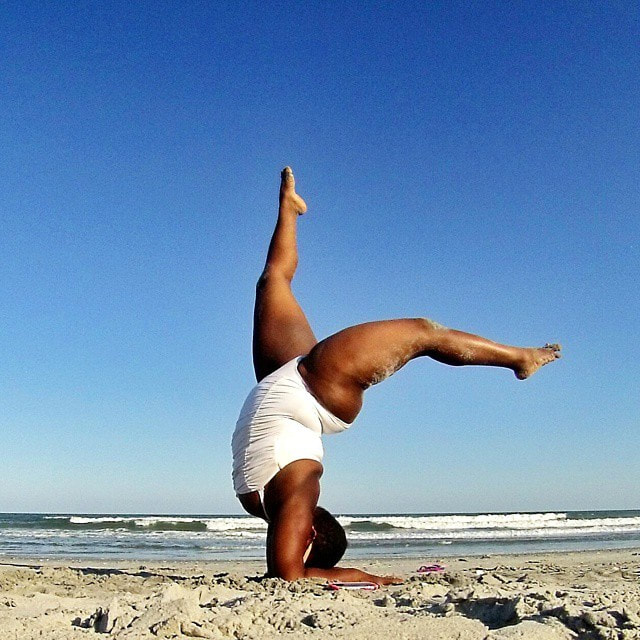
Plus Sized Yogini Jessamyn Stanely taking a strong Peacock pose on the Beach

Yoga is for every-body!  Despite the images you may see on TV, Film & Social Media there is NO right or wrong body type for yoga.  Humans love to compare, so naturally when we see skinny women in spandex leggings on TV doing handstands we think “There is no way I could do that”  or “Only if I were tiny like her then I could do all the Yoga moves.”  I must confess those were some of my first thoughts when I first stepped on the mat.
 
The Question becomes: “Does Yoga have a body image issue?”   Thankfully the answer is no. Yoga does not have a yoga body issue, however we in the west DO have a body image issue. 
 
The great news is that in the last several years there have been a handful of Phenomenal women and men who have stood up to shine a light on this ugly little secret.  The truth is that since Yoga has become a business, there has been  a ton of money poured into marketing and creation of the Yoga image. This image like all other sales avatars alienates most people and focuses on conventional ideas of beauty & strength (i.e. hetero-normative, skinny white women in fancy pants doing hands stands).  The reality of Yoga could not be more different. The postures and poses of yoga are meant to be applicable to all body types depending on the need of the individual, hence all the various modifications available for a single pose.
 
One Fearless Woman leading the  Yoga body image revolution is Jessamyn Stanley. Jessamyn is a voluptuous, queer, women of color who is smashing yoga body image stereo types left & right.  She is unafraid to acknowledge that many of the challenges facing those who have bodies out side of the culturally approved norms come from the glares & judgment of others. These stares coupled with the internal dialogue of comparison can easily prevent a first timer from ever stepping foot in a studio. However, as long as you remember why you are coming to Yoga in the first place then all the other obstacles will fall away, as Jessamyn put it ““The whole point of this practice is to burn away the parts of our lives that are built up over the years that don’t matter, and to burn that away to who you truly are.”[1] Skinny or Big, White or Black, Straight or Queer – Yoga is for  EVERY BODY. 
 
More importantly, there aren’t just two sides of the coin. The body of a yogi can land anywhere on a broad beautiful spectrum because ANYONE can practice yoga. 
Remember -- “Your body is not standing in your way[,] Only your mind is[.]” [2]
Get out there, get on your mat, and start to burn away what no longer serves you so that you can rise from the ashes like Phoenix – renewed, rejuvenated, ready to take on the world.
 
 
 Footnotes:
[1] http://www.boredpanda.com/plus-sized-yoga-jessamyn-stanley-fat-femme/

[2] http://www.boredpanda.com/plus-sized-yoga-jessamyn-stanley-fat-femme/


Archives

September 2017
August 2017
June 2017
May 2017
April 2017
March 2017
November 2016
October 2016

Categories

All Infographic Personal Management Podcast Interviews Professional Development Success Coaching Time Ninja Series Under The Bodhi Tree Yoga

1 Comment

9/21/2017 0 Comments

The joy of 2: Intro to Partner & Acro Yoga

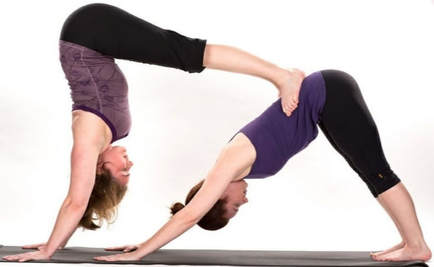
PictureDouble Down Dog, A Partner Yoga Pose
After years of flourishing in the west, the yoga family tree is growing more branches. Every year it seems a new lineage or teaching styles is developed. Each one grounded in something a little different then the last, some with vastly different teaching methods. The activity that was once deemed a solo practice has evolved into a team sport with the help of a few adventurous souls.  The partner yoga phenomena is sweeping the globe! You may be left wondering: What is Acro or Partner Yoga anyway?
 
Acro & Partner Yoga are close relatives. Partner yoga is the milder of the two. Both up the ante on the original, singular, individual asana practice we have grown to know and love.  These two styles of yoga utilize the combination of 2 or more individuals to counterbalance each other’s weight in order to sustain one grand pose.

Archives

September 2017
August 2017
June 2017
May 2017
April 2017
March 2017
November 2016
October 2016

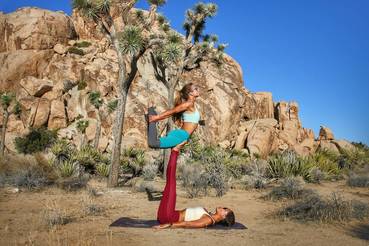
PictureAcro Yogis Having Fun in the Desert.
Partner Yoga is mostly known for poses like double down dog and double plank.

In this  pose leverage is being created by the connection between the feet and lower back of the the two yogis. When executed properly & safely the Yogi in Downward dog should be able to lift their arms off the ground. 
 
Shockingly enough, the novelty of a double down dog pales in comparison to the Wow factor of Acro Yoga .  Acro- Yoga is known for its gravity defying poses like floating bow pose.  Acro Yoga has created a marriage between acrobatics, yoga, and team work that has caught the attention of thousands of people over the last few years.

 
While these two styles are still growing in popularity nationally, you will happily find more than a few offerings for both in Atlanta. 
 
Despite what you may think, there are no height/weight/strength requirements to take an Acro or Partner yoga class.  Nor do you have to bring a partner that is your same height/weight/build in order to  participate. I once went to a partner yoga workshop with a friend who is at least 5-6 inches taller then me & weighs at least 30 pounds more than me. I am happy to report our size differential was not an obstacle at all!
 
If this all sounds way far a field, I can understand. The first time I heard about these Yoga styles I was slack jawed.  However, after experiencing it for myself I was amazed. There is a certain level of interconnectedness, synergy and unified focus that is created when you attend one of these classes with a friend, lover, or family member. You undoubtedly become closer to them, and grow more uniquely aware of your own power.
 
Interested in trying out a partner Yoga workshop in Atlanta? Check out  Nirvana Yoga Atlanta they offer Partner Yoga workshops several times a year.  Feeling acrobatic? Then visit www.AcroAtlanta.com for classes and workshops located at Intown Tumbling near old fourth ward.
 
Until Next time…. Namaste!


Categories

All Infographic Personal Management Podcast Interviews Professional Development Success Coaching Time Ninja Series Under The Bodhi Tree Yoga

0 Comments

9/14/2017 0 Comments

The Myths & Movement....

by Awilda Rivera

Originally Published July 2016 for Aquarius Magazine in "Under The Bodhi Tree"

Categories

All Infographic Personal Management Podcast Interviews Professional Development Success Coaching Time Ninja Series Under The Bodhi Tree Yoga

Picture
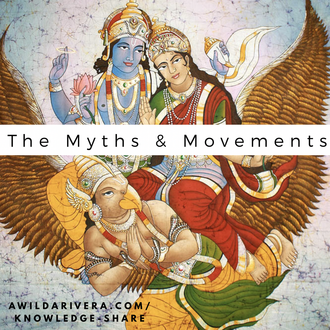
There are many layers to the rich tapestry of Yoga. We have discussed the ancient philosophy, physiology and modern interpretations of Yoga.  However we have neglected to explore the Mythology of Yoga. It is not shocking that the Yogic tradition has elaborate Myths attached to the creation and naming of  many of its most notable poses.
 
Surprisingly, not all of the Myths associated with Yoga are connected to Hindu Mythology.  Some of the stories are connected to ancient ways of living, others to an understanding about nature, and some are even tied to stories of the Buddha.
 
There is a lot to learn about Yoga through these many myths. For example, it is said that Tree pose was developed to help us embody the tolerance, altruistic giving, strength and balance that  trees have symbolized to humanity since the beginning of time. [1]   Another notable myth tells of a Man who spent 3 lifetimes trying to master the Vedas[2], only to realize that he spent 3 lifetimes focused on the wrong thing.   This dedicated man had thought the best way to get close to divinity was to memorize these sacred texts; however he had failed to realize the ultimate lesson: knowledge gained and not shared helps no one. After being given the opportunity to experience a 4 lifetime, the man spent all his living years sharing the knowledge and joy of Vedas with others. Ironically at the conclusion of the 4th lifetime he was given the opportunity to avoid further reincarnation[3], yet the happiness he had experienced while sharing the knowledge was so great that he chose to continue being reborn so that he could share the knowledge with others. [4]
 
Many of the Myths are allegorical and serve to illustrate important points about life’s greater noble truths. These myths illuminate nuances about how to live  in harmony with yourself and your environment. The stories shine a light on the importance of being able to occupy a space of harmony with humility and grace, such that your peaceful presence can be an example to help others achieve the same state of existence.
 
If you are interested in reading more of the Yoga Myths, there are several excellent books in print that will provide a closer look at these incredible stories.  Here are a few books that contain many of the Yoga Myths and can help you experience yoga through this new lens:
 
  1. Myths of the Asanas, by Alana Kaivalya (mandala publishing 2010)

  2. Downward Dogs and Warriors: Wisdom Tales for Modern Yogis, By Zo Newell (Himalayan Insitute, 2007)

  3. Yoga: Immortality and Freedom (Mythos: Princeton /Bollingen Series on World Mythology) by Mircea Eliade & William R. Trask - 2009
 
The myths of Yoga offer a refreshing perspective on an ancient practice through its own narrative. Don’t take my word for it, check it out for yourself. Check out one of these awesome resources. Dive into the world of lessons learned and miraculous triumph!
 
Until Next time, Namaste y’all!

Footnotes:
[1] Myths of the Asanas, Alana Kaivalya (Mandala Publishing 2010), p. 167
[2] Vedas are sacred Hindu Texts
[3] The liberation from the cycle of reincarnation is a very significant concept in Hinduism – this liberation from the death and rebirth cycle could be compared to experience of reaching enlightenment.
[4] Kaivalya, p. 111-116


0 Comments

9/7/2017 0 Comments

Consider this...before booking a Yoga Retreat

by Awilda Rivera.

original published in Dec. 2016 for Aquarius Magazine in "Under the Bodhi Tree". Some edits have been made to the original artcle.

Picture
 
In the last decade, the Yoga Retreat Phenomenon has taken the world by storm.  Right now, there are dozens of Yoga Retreats happening all over the globe. The benefits of a healthy yoga practice have become so widely known that people want to incorporate it into their travel plans.
 
Yoga Retreats come in many forms, from very structured to incredibly lax.  Asana classes are standard & will often be offered multiple times a day on each day of the retreat.  Opportunities for meditation will be offered either as free hours in between classes or in a more formal workshop setting. Some retreats offer exposure to additional activities like surfing, eco-tourism, and cultural immersion.  Often Breakfast will be provided, however on some retreats there are no meals included. Accommodations are always 100% factored in to retreat pricing.
 
Interested in finding the right Retreat for you?

Here are the TOP 6 THINGS TO CONSIDER when choosing your Perfect Yoga Retreat:
 
  1. Duration – Are you interested in a weekend getaway or a week escape? Knowing exactly how long you wish to be away on your retreat is essential to helping you identify what kind of a retreat will be best for you. Yoga Retreats can be anywhere from 24 hours  to 30 days long.  Identifying your ideal retreat duration will help you to eliminate a lot of trips that simply do not fit your needs.

  2. Budget – Yoga retreat pricing can vary from $500 for a weekend on Jekyll Island, to $2500 for 5 days in Morocco.  I am offering  a retreat to Nicaragua in February 2017 with packages that start at $1000. Determine your budget and stick to it,  no need to spend more then necessary and risk regretting your trip for financial reasons.

  3. Location – Beach, mountains, woods, domestic, international – the world is yours. There are retreats offered in all kinds of environments to meet a myriad of desires and needs. Think about your happy place and there is likely a yoga retreat offered there, or someplace similar.

  4. Teaching Style – Some trips focus their Asana class offerings on a particular teaching style. Make sure you read the fine print.  If what you want is a relaxing all levels yoga classes on your retreat, then you might not want to go on a Power Yoga retreat. Take some time to research the nuances of the teaching styles offered on the retreats you are considering, watch Youtube videos, ask friends, perhaps go to a studio that offers that style of yoga so that you can be sure you will enjoy what is being offered.

  5. Required vs. Optional – It is important to note if a retreat has required activities. If you are looking for a more relaxed trip then a trip where every class is required is likely not for you.

  6. Excursions & Add-Ons – Surfing, City Exploring, Hikes,  Culturally immersive Day Trips & Snorkeling are a few of the most common add-on activities for Yoga retreats. These additional activities often come at an additional cost. Package details will usually reveal what options are available for additional activities, as well as day trips and upgrades.

Ultimately, if you are looking to go on a yoga retreat there is something out there for you. I will be hosting at least two yoga retreat's a year. In 2017 I took groups on: (1)  Yoga & Surf Retreat to Nicaragua from February 18 -25, 2017, and (2)Cultural & Wellness Immersion to Cuba. In April 2018, I will be leading a group to Barbados on a Caribbean Wellness Escape - for more information visit www.AwildaRivera.com .  If your interested on what other kinds of trips are available, then you should check out websites like TripTribe.com or BookYogaRetreats.com. Enjoy your adventures, until next time yogis!


Archives

August 2017
June 2017
May 2017
April 2017
March 2017
November 2016
October 2016

Categories

All Infographic Personal Management Podcast Interviews Professional Development Success Coaching Time Ninja Series Under The Bodhi Tree Yoga

0 Comments

8/31/2017 0 Comments

Let Yoga Help you ride the Change Train.....

by Awilda Rivera

 Originally published in Sept. 2016 In Aquarius Magazine for her long running column "Under The Bodhi Tree" under the heading 'Yoga and Change'

Picture
The only thing constant in life is change.  From the moment we are born  we are changing, and we are also acutely aware of all that is changing around us. Change is something that needs no catalyst - it is always happening. Over time we grow to understand that we cannot control the change:  in our society, in the behavior of others, or in nature.  The question soon becomes: “What can we control?”  Simply put,  our individual response.
 
How we respond, that is the only thing in our control. Change can cause a myriad of reactions from excitement to resistance.  Yoga is an excellent tool for anyone dealing with change, especially if your response happens to fall anywhere on the spectrum below “excited”.  Luckily, Yoga can act as a salve to help one get grounded when in the midst of change that may be overwhelming. A consistent yoga practice can provide us with several tools. It can help one keep an open perspective and create the internal flexibility needed to facilitate the cultivation of healthy future responses to change.  
 
The following Yoga practices have helped me to embrace and adapt to change better over the last few years:

  1. Simple Inversions:  such as Viparita Karani (aka Legs up the Wall) , Down Dog, or wide legged forward fold will help to shift stagnant energy from the feet back up through the body into the head. The physical act of placing the head below the heart, while in these poses, can help shift our perspective, giving us the opportunity to truly look at the potential change from another angle.

  2. Simple Twists:  such as Marichayasana (seated Sage twist) or reclined twist with bent knees can help to open up energetically clogged meridian lines in the body. Twisting will help to facilitate the release fixed views or opinions that no longer serve you – these views may be manifesting themselves as resistance to change.  (Twist are not recommended if you have a severe spine injury, back problems, during pregnancy, soon after surgery. After recent or chronic hip, knee, or shoulder injury please consult your physician before practicing yoga. )
 

  1. Back Bends: such as Baby Cobra, Cobra, or Bridge have garnered the nickname “Yoga Paxil”  because these poses are believed to be natural anti-depressants. This genre of poses help to open the chest, shoulder & abdomen. Opening the shoulders & chest allows for the physical and energetic heart to shed stagnant energy, and embrace new possibilities. (Backbends are not recommended for those who suffer from spinal stenousis or spondylolisthesis. If you have scoliosis please consult a doctor before you begin a yoga practice as backbends may also be contraindicated depending on the extent of condition)

Try incorporating these tips into your life so that you can embrace change with a new perspective, open heart, and unblocked energy flow. We can control our how we respond, and yoga can help us cultivate positive future responses to change. Until next time, Namaste....


Categories

All Infographic Personal Management Podcast Interviews Professional Development Success Coaching Time Ninja Series Under The Bodhi Tree Yoga

Archives

August 2017
June 2017
May 2017
April 2017
March 2017
November 2016
October 2016

0 Comments

8/24/2017 0 Comments

The Top Three Reasons you aren't practicing Yoga....

by Awilda Rivera

**This Article was Originally published as apart of Awilda's long running column in the Aquarius Magazine called -  "Under The Bodhi Tree"

View my profile on LinkedIn
Yoga seems to have taken over the…right? We see celebrities doing it. We see Yoga in commercials, in Movies, on Billboards.  At this point everybody is on board, and riding the Yoga train, right?  Wrong.  While Yoga has gotten a lot of attention and its popularity has grown there are many people out there who still avoid Yoga at all costs. I took the time to talk to some non-yogis to investigate some of the major concerns keeping them from the mat. What I discovered was that Time, a lack of understanding, and fear of embarrassment topped the list of concerns.
 
1.   “ I Don’t have enough time”
 
 A common complaint, most American’s are used to being able to hit the gym for 30 minutes and be done for the day.  Yes, there are 90 minute Yoga classes, but you will find that many studios have moved towards the 60 minute yoga class format. In a hour long class  the time breaks down like this:  10-15 minute warm-up, 25-30 minutes of activity, and 5-10 minute cool down, 10 minute relaxation pose.  The truth is that you are only really working-out for 30 minutes, the rest of the time is warm up and cool down – an essential part to staying injury free.  As humans we make time for anything we really want to do, sometimes staying up late just to catch up on a particular show that we missed. If we want to make time for Yoga, we can, we just need to prioritize our health, well being, and peace of mind. Think about it, what do you make time for?
 
 
2.  “I am afraid of being embarrassed in front of class”
 
This is an understandable concern. Yoga is about empowerment, learning our bodies, looking within so we can work with ourselves. Of course the first time you go to a Yoga class you won’t know the poses. The movements will feel foreign in your body and it you may even feel awkward.  There is always the temptation of looking at the other students during class. The danger in looking around the room is that what may look like ‘basic’ movements in the bodies of your classmates may feel extremely challenging in your body.  ITS IMPORTANT TO REMEMBER THAT NONE OF THE OTHER STUDENTS ARE LOOKING AT YOUR FORM. The only person that is looking at you is the Yoga instructor because they need to keep you safe. Unlike a dance class or martial arts class, Yoga is free from any moments where individuals get up and do something in front of the class.  The only time the instructor is likely to speak to you directly would be to keep you safe, and would likely be in a whisper tone. Rest assured that you are safe from any danger of being “embarrassed in front of the class”.
 
 
3.  “The language and moves are overwhelming”
 
Learning new things  can be overwhelming, especially if they take you outside of your comfort zone.  Learning Yoga is like learning a new language because you are learning both a new movement vocabulary, English names for the poses, and possibly Sanskrit names of the poses.  Learning a new language takes time.  Think about your native language, as a baby it took you time to learn the words and context to speak meaningful sentences.  Let yourself learn it in pieces. The common problem with new Yogis is that they want to run before they can walk. You may want to already know the basics and be moving on to more advanced postures by week two; however, you must be patient with you body, mind and self.  Better to take your time and really learn it, rather than to rush and get injured.
 
                                                                 -----
Don’t take my word for it! Get out there and see for yourself! The right teacher, at the right studio, just once a week can make a huge difference in your mental, emotional, and physical health.  A little adventure never hurt anyone….until next month.  Hit that mat and Nama-SLAY!

Categories

All Infographic Personal Management Podcast Interviews Professional Development Success Coaching Time Ninja Series Under The Bodhi Tree Yoga

Archives

June 2017
May 2017
April 2017
March 2017
November 2016
October 2016

0 Comments

11/29/2016 0 Comments

Under the Bodhi Tree:  Sept. 2015

15 years ago there were less then 10 Yoga studios in the Atlanta Metro area.  Now it seems that a new Yoga Studio opens every few weeks.  The issue no longer is: “where can I find a yoga class,” but rather “should I attend a Hot Power Yoga class or a Yin Vin class”. For many the essential question remains: “Is it not all Yoga?”
 
The short answer: Everything is Yoga. Yoga comes from yug which means to Yoke or bring together. The union of mindfulness, movement, breath, concentration and action is Yoga.  The movement part, Asana, is one of 8 limbs of the Tree of Yoga.  As Americans we tend to get caught up in the movement, concerning ourselves with the physical results rather than the process.
 
My first forays into Yoga consisted of traveling around to multiple Studios, marveling opened mouthed at what other people could do, cursing my body and my seemingly fading athleticism for not being able to copy what I saw with immediate ease. I wondered, about the calming & centering aspect of Yoga I had heard about so often. I wondered how the balance of effort & ease would make itself known to me. At the beginning of my Journey, it seemed that every Yogi I laid eyes on in class was able to find a graceful hang-time between their edge & relaxation, regardless of how challenging the posture.  It seemed impossible to me that there would ever be a time or place where I would feel truly “calm & centered” while standing on one leg, bound like a pretzel. However, I did not let that deter me from continuing to explore what Yoga had to offer me.
 
Almost 2 years later, I am able to achieve the same graceful hang-time I once coveted in Gauradasana, Eagle Pose (standing on leg bound like a pretzel) . How did I get here, was it a miracle?  No. Is my body special? NO.  Am I some kind of a Unicorn? No.  In fact, as a native New Yorker, born to Puerto Rican parents in poverty, my environment made me predisposed to dislike Yoga. As a teenager, I considered it a luxury for the privileged who simply did not care for real exercise or real sports. I know now that Yoga is a lifestyle, and the Asana are like a medicine that can help keep you healthy & happy.
 
Ancient Yoga texts are clear that the use of Asana, the physical postures of yoga,  is intended to be prescriptive.  The Asana should be used to give the body what it needs physically, energetically, and spiritually.  We are all different. As our needs vary from day to day the way we experience Yoga can be effected. Therefore, when one begins to explore a Yoga Asana practice you should go to many studios & try many different styles of Yoga. Once you find a style, studio or teacher that can fill your personal prescription then the other aspects of Yoga begin to reveal themselves in unison with the movement. Even if you have been practicing a certain style for a longtime it is always good to vary your practice occasionally so that you can nourish the different aspects of you body, energy & spirit
 
Many of you reading this may already meditate, chant, engage in mindful movement or practice Asana. The truth is that those are all still just limbs of the Tree of Yoga.  Yoga is: how you live; what you do; how you treat others; why you do things; & how you keep yourself operating at the highest vibration possible. Yoga is not about how many sun salutations you can do, or if you can do a handstand.
 
Yoga simply asks:  what are you willing to do with what you have been given that will improve the quality of your environment?
 
Yoga is the gift of the Universe to the world. This Ancient system is a non-religious way of living that offers infinite prescriptions for what ales you. Yoga exists to improve our lives, if you are willing to dive in and look beyond postures. Dare to cultivate your prescription of the right postures through exploring different studios and styles. Are you ready to dive in?
 
Namaste, Awilda
0 Comments

10/4/2016 0 Comments

Under the Bodhi Tree - October 2016

On Bahkti Yoga - The Yoga of Devotion

For the last 12 months, we have explored questions around the practice, purpose and benefits of Yoga Asana. We have taken time to explore some of the philosophical underpinnings of this historically rich tradition; and we have also discussed how to identify & begin a physical yoga practice that resonates with your soul.  Yet, we have only begun to scatch the surface.  All we have discussed relate primarily to the physical practice of Yoga Asana and all that comes with it.
 
The question remains: Can Yoga exist off the Mat, with out Asana being involved?
Yes! There are several types of Yoga that exist. As westerners we are most commonly acquainted with  Hatha & Raja Yoga[1].  Hatha & Raja Yoga contain an essential element of physicality that is very attractive to busy people in the west who are looking to exercise their body in an intentional. It is through this intentional exercise that they hope to achieve balance, increased self-awareness, and ideally inner peace – also know as enlightenment.
 
Bahkti Yoga exists devoid of required physicality. It is known as: The Yoga of Love, The Yoga of Devotion, The Yoga of Devotion To God.  Ultimately, this is the Yoga of Surrender to the Divine.  There is neither a Diety in particular to whom you must devote yourself, nor one idea; however, in order to surrender completely you must devote yourself to something greater than yourself.  The devotion to something greater need not take a shape or personage, but it can be simply embracing the Divine Love and connection we all share OR  the Beauty of Nature all around us in every living thing.
 
In a modern western world, it is understandable that we modify the application of the ancient principles of Bahkti Yoga to fit our realistic needs. Therefore you many not feel called to sing Kirtan,  chant mantras every morning, or set an altar with deities to whom you pray directly… and that’s OK!  There are may ways you can tap into the spirit of Bahkti Yoga such as: volunteering, giving food to the homeless, dedicating the energy your physical Yoga practice to someone who is in need, interacting with all around you from a place of unconditional love & non-judgment, or immersing yourself in nature so that you can appreciate the beauty of the world around you.
 
Bahkti Yoga is not a RELIGION. It is just another avenue available to those who are looking to connect with the Divine through a unity with the world around them. While I would certainly encourage you all to experience a Kirtan performance and research mantras, I understand that for some of you that will not resonate. The great news is that in this brave new world, we have the opportunity to take the powerful ideas of Bahkti Yoga: Love – Devotion – Connection with the Divine, and find ways in our everyday lives to organically engage in this fulfilling and empowering practice. How will you bring a little Bhakti Yoga into your life?
Until next time…. Namaste!! 


[1] You may be unfamiliar with Raja Yoga, however it is the Original Form of classical Yoga from which 90% of yoga lineages found in west were derived. It is also known as the ‘8 limbed path’ of Yoga.  Hatha Yoga is more commonly known as ‘Sun Moon’ Yoga as is focused on using the body as a vehicle to transform the conscious of an individual. 
​
0 Comments
Forward>>

    Knowledge Share: 
    ​
    A Place for Discovery & Growth

    Welcome! I am so glad you found this  area of my site!  It is my intention to share a tone of awesome free content with you all here. Feel free to comment, email or share posts that you enjoy! Thanks for visiting!

    **All blogs written by Awilda Rivera, unless otherwise indicated therein.

    Categories

    All Infographic Personal Management Podcast Interviews Professional Development Success Coaching Time-ninja-series Under-the-bodhi-tree Yoga

    Archives

    July 2019
    March 2019
    February 2019
    December 2018
    November 2018
    October 2018
    September 2018
    August 2018
    March 2018
    February 2018
    December 2017
    November 2017
    October 2017
    September 2017
    August 2017
    June 2017
    May 2017
    April 2017
    March 2017
    November 2016
    October 2016

    RSS Feed

Est. 2013   
 ©️ ​2013 All Rights Reserved.
 Email: C[email protected] 
​ Phone: 508.603.9461
Privacy Policy

​2020 Media Kit